About A3 Energy
We turn what’s left over in the field into fuel for the furnace.
A3 Energy converts agricultural and forestry residue — husk, stalk, shell, sawdust — into biocoal, pellets and briquettes for industrial and commercial heat. What used to be burned in the open or landfilled now runs boilers instead of coal.
Why residue, why us.
The problem was never the residue — it was that burning it in the open was the easiest thing to do with it.
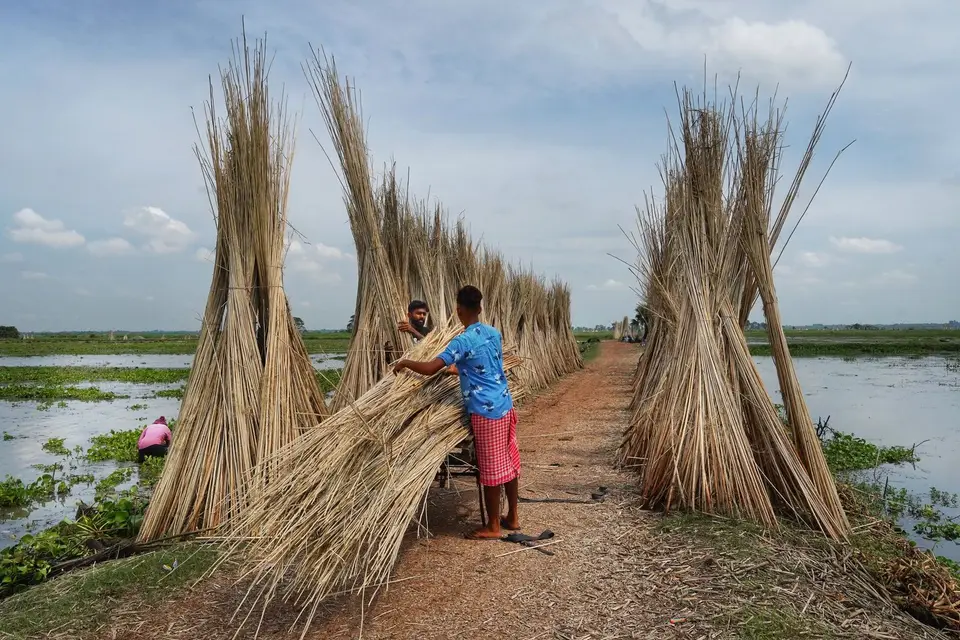
Every winter, fields across India fill with smoke from burned stubble because there’s nowhere else for the residue to go. A3 Energy exists to give it somewhere better — a boiler, not a bonfire. We built our model around one idea: process what’s already there, and size it to fit the furnaces already running, so switching off coal never means retrofitting your plant.
From field to furnace.
The same four steps, regardless of which of the three fuels comes out the other end.
Collect
We buy husk, stalk, shell and sawdust directly from mapped farmer and aggregator clusters, at prices fixed for the season.
Dry & size
Residue is dried to a target moisture band and shredded or chipped to a uniform feed size before densification.
Densify or carbonize
Material is pressed into pellets and briquettes, or carbonized into biocoal, on lines sized for continuous throughput.
Test & dispatch
Every batch is lab-tested for GCV, ash and moisture, then packed and dispatched with its certificate.
The residue we’re built around.
Four broad categories cover most of what we process, each suited to a different one of our fuels.
- Husk & strawRice, mustard and wheat husk and straw — high-volume residue across India’s grain belts.
- StalksCotton, mustard and bajra stalk — dense, fibrous residue well suited to pelletizing.
- ShellsGroundnut and coconut shell — high-GCV residue with naturally low ash.
- Wood & sawdustSawdust and forestry residue — the base feedstock for our biocoal line.
What we hold ourselves to.
Not a mission statement — the three things that actually shape how we work.
Residue first
We only process agricultural and forestry residue that would otherwise be burned in the open or left to rot — nothing purpose-grown.
Tested, not assumed
Every batch is lab-tested for GCV, ash and moisture before dispatch, so what you order is what you burn.
Built around your furnace
We size and densify fuel to match the feed system you already run, rather than asking you to retrofit around us.
What you can count on with every order.
Three things that matter more than price once you’re running it every day.
Batch-tested
GCV, ash and moisture are checked on every batch, not sampled occasionally — the certificate ships with the load.
Flexible packaging
30–50 kg bags, jumbo bags or loose bulk, matched to how your yard actually receives fuel.
Consistent specifications
What you were quoted is what ships — no surprises in GCV, ash or moisture between loads.
Questions we get a lot.
If yours isn’t here, ask our fuel engineers directly.
Do you only process agricultural residue, or purpose-grown biomass too?
Only residue — husk, stalk, shell, sawdust and similar material that would otherwise be burned in the open or left to rot. We don’t process purpose-grown crops.
What documentation comes with an order?
Every dispatch ships with a lab certificate covering GCV, ash and moisture, so what you’re quoted is what you receive.
How is pricing set, and does it change mid-season?
Pricing is fixed against mapped supplier clusters for the season, so it stays stable rather than moving with spot residue costs.
How far do you dispatch?
Pan-India, subject to tonnage and route — share your location and monthly requirement on the contact page and we’ll confirm logistics and lead time.