
Product range
Fuel matched to your furnace, not the other way round.
Agro-residue, forestry waste and coconut shell, processed into fuel formats matched to different furnaces and burn characteristics. Specification sheets below are indicative — every dispatch ships with a lab test certificate.
| Fuel | GCV (kcal/kg) | Moisture | Ash content | Best for |
|---|---|---|---|---|
| Biocoal (Coconut Shell) — Hexagonal Biocoal Logs | 5,200 – 5,800 kcal/kg | < 8% | < 6% | Coal-fired furnaces & kilns |
| Biocoal (Coconut Shell) — Pillow Biocoal Briquettes | 5,200 – 5,800 kcal/kg | < 8% | < 6% | Coal-fired furnaces & kilns |
| Biomass Pellets — Agro-Residue Pellets | 3,800 – 4,200 kcal/kg | < 10% | < 8% | Automated boilers & gasifiers |
| Biomass Pellets — Pine Wood Pellets | 4,200 – 4,500 kcal/kg | < 8% | < 2% | Low-ash boilers needing higher GCV |
| Briquettes — 70mm Briquettes | 4,000 – 4,400 kcal/kg | < 12% | < 9% | Smaller furnaces & manual feed |
| Briquettes — 90mm Briquettes | 4,000 – 4,400 kcal/kg | < 12% | < 9% | Larger furnaces & batch kilns |
For furnaces & kilns
Biocoal (Coconut Shell)
Torrefied and densified coconut shell, carbonized to behave like coal on the grate — available as extruded hexagonal logs or pillow-shaped briquettes.
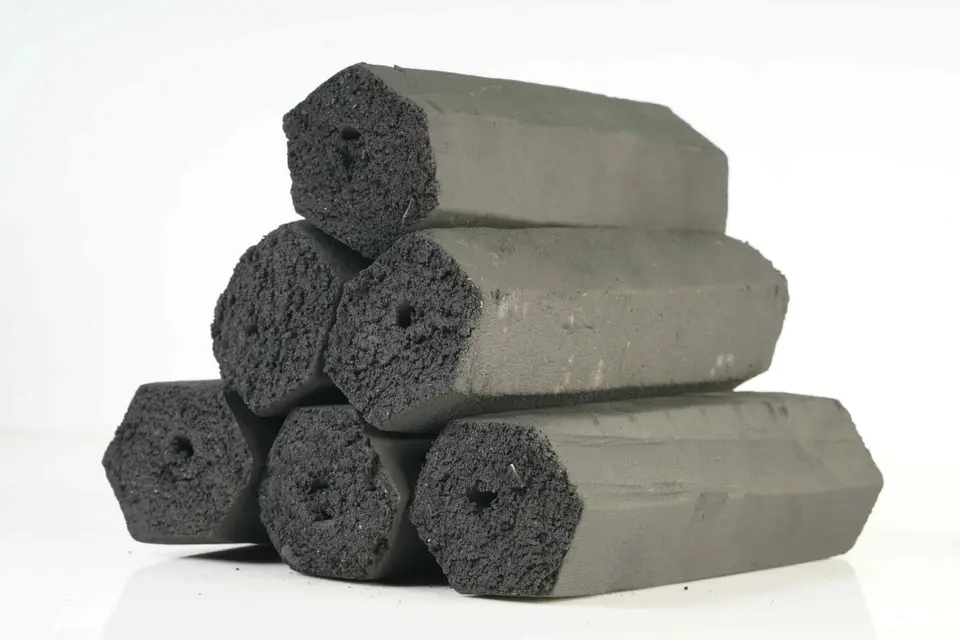
Extruded log format
Hexagonal Biocoal Logs
Hexagonal extruded coconut-shell biocoal logs with a center bore for even, controlled combustion — dense, and easy to stack and handle.
Feedstock: Coconut shells, carbonized in a controlled, low-oxygen process and extruded into hexagonal logs.
- GCV5,200 – 5,800 kcal/kg
- Moisture< 8%
- Ash content< 6%
- Fixed carbon55 – 65%
- Size25 mm hex, 50 mm length
- Packaging50 kg bags / bulk
Best suited for
- Direct replacement in coal-fired furnaces and kilns, no retrofit
- High-temperature industrial process heat
- Blending with existing coal stock to cut emissions gradually
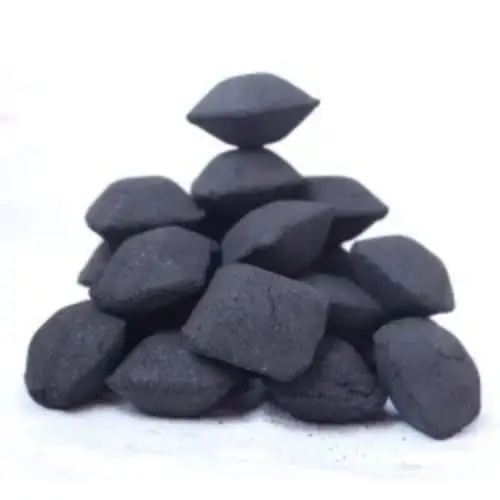
Pillow / cushion format
Pillow Biocoal Briquettes
Pillow-shaped coconut-shell biocoal briquettes, compressed into a dense, longer-burning lump format — a direct drop-in for coal on the grate.
Feedstock: Coconut shells, carbonized in a controlled, low-oxygen process and compressed into pillow-shaped briquettes.
- GCV5,200 – 5,800 kcal/kg
- Moisture< 8%
- Ash content< 6%
- Fixed carbon55 – 65%
- Size25 – 40 mm lumps
- Packaging50 kg bags / bulk
Best suited for
- Direct replacement in coal-fired furnaces and kilns, no retrofit
- High-temperature industrial process heat
- Blending with existing coal stock to cut emissions gradually
For boilers & gasifiers
Biomass Pellets
Compressed agro-residue or pine wood, pelletized to a consistent diameter for automated, continuous-feed systems — pick the feedstock that fits your GCV and ash targets.
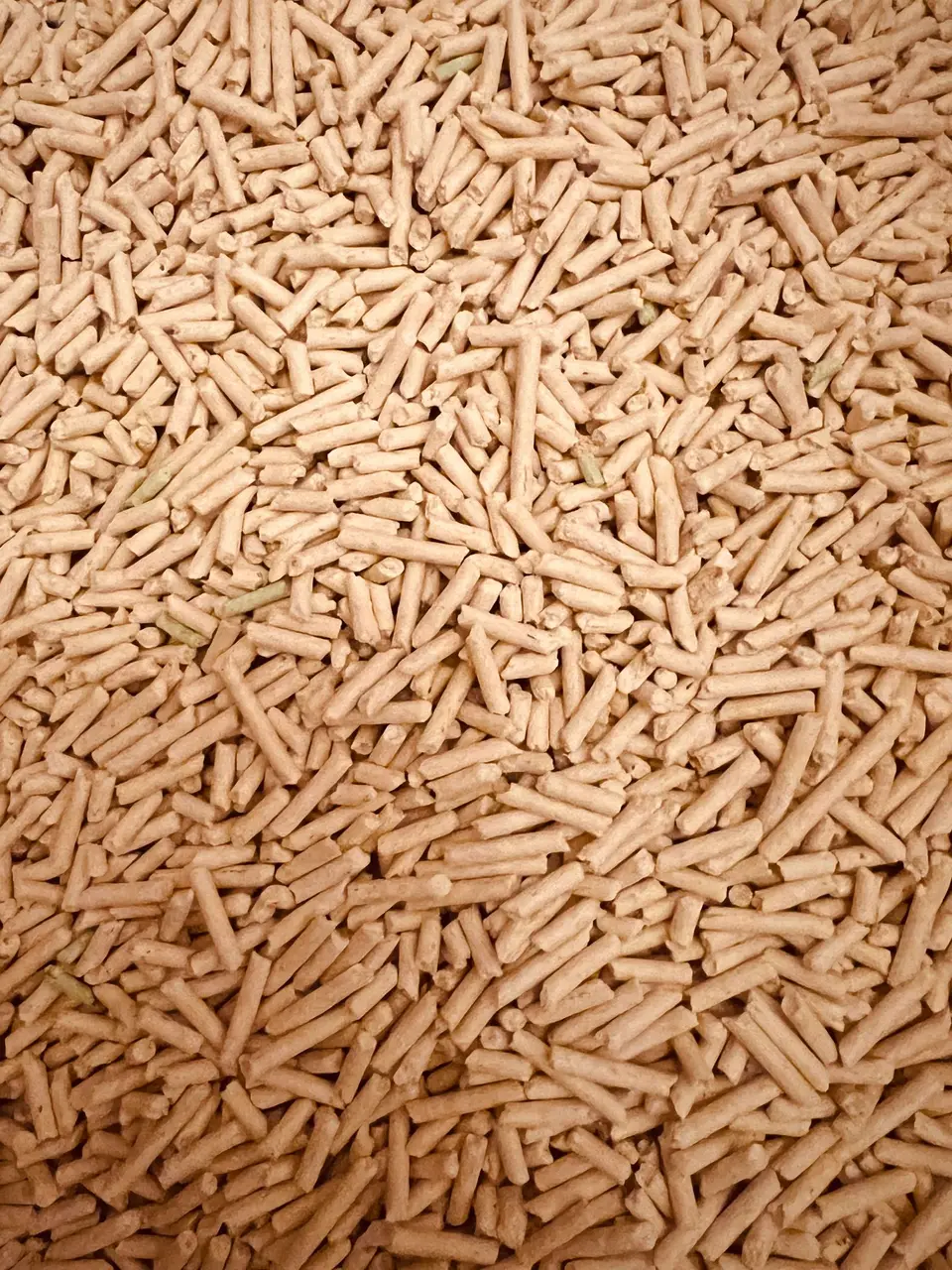
Standard, lowest cost
Agro-Residue Pellets
Compressed agro-residue pelletized to a consistent diameter for automated, continuous-feed systems.
Feedstock: Mustard husk, cotton stalk and groundnut shell, sourced from mapped supplier clusters.
- GCV3,800 – 4,200 kcal/kg
- Moisture< 10%
- Ash content< 8%
- Diameter6 mm / 8 mm
- Length10 – 30 mm
- Packaging30 kg bags / jumbo bags
Best suited for
- Automated, continuous-feed industrial boilers
- Biomass gasifiers needing a uniform feed diameter
- Steam generation for textile and food processing plants
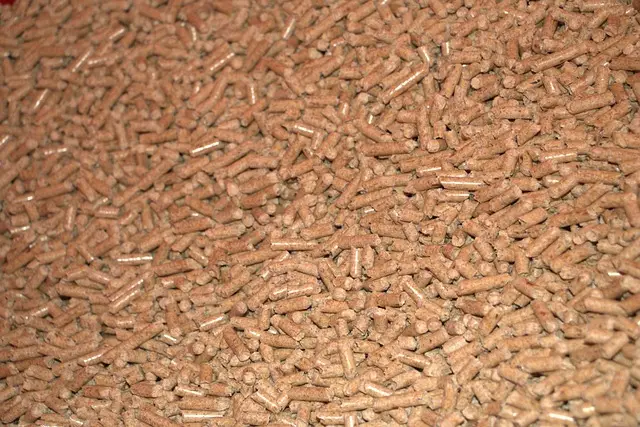
Higher GCV, lower ash
Pine Wood Pellets
Compressed pine wood sawdust pelletized to a uniform diameter — higher, more consistent calorific value with lower ash than agro-residue pellets.
Feedstock: Pine wood sawdust and shavings, sourced from sawmill offcuts.
- GCV4,200 – 4,500 kcal/kg
- Moisture< 8%
- Ash content< 2%
- Diameter6 mm / 8 mm
- Length10 – 30 mm
- Packaging30 kg bags / jumbo bags
Best suited for
- Boilers requiring low-ash, high-GCV fuel
- Premium industrial and export-grade applications
- Blending with agro-residue pellets to lift average GCV
For continuous-feed furnaces
Briquettes
High-density cylindrical briquettes with a longer burn duration than loose pellets — pick the diameter that fits your furnace and feed cycle.
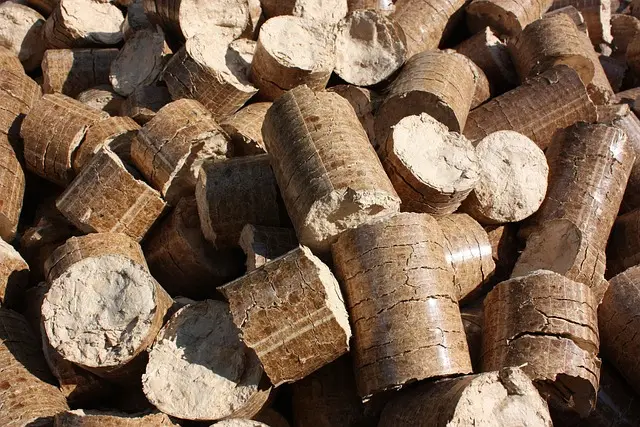
Compact, easier handling
70mm Briquettes
Compact 70mm cylindrical briquettes — easier to handle and feed manually, suited to smaller furnaces and batch systems.
Feedstock: Sawdust and mixed agro-residue, compressed without any binder.
- GCV4,000 – 4,400 kcal/kg
- Moisture< 12%
- Ash content< 9%
- Diameter70 mm
- Length150 – 250 mm
- PackagingLoose / palletized
Best suited for
- Manually-fed furnaces and smaller boilers
- Batch-fed brick kilns and foundries
- Easier handling and stacking on tighter yards
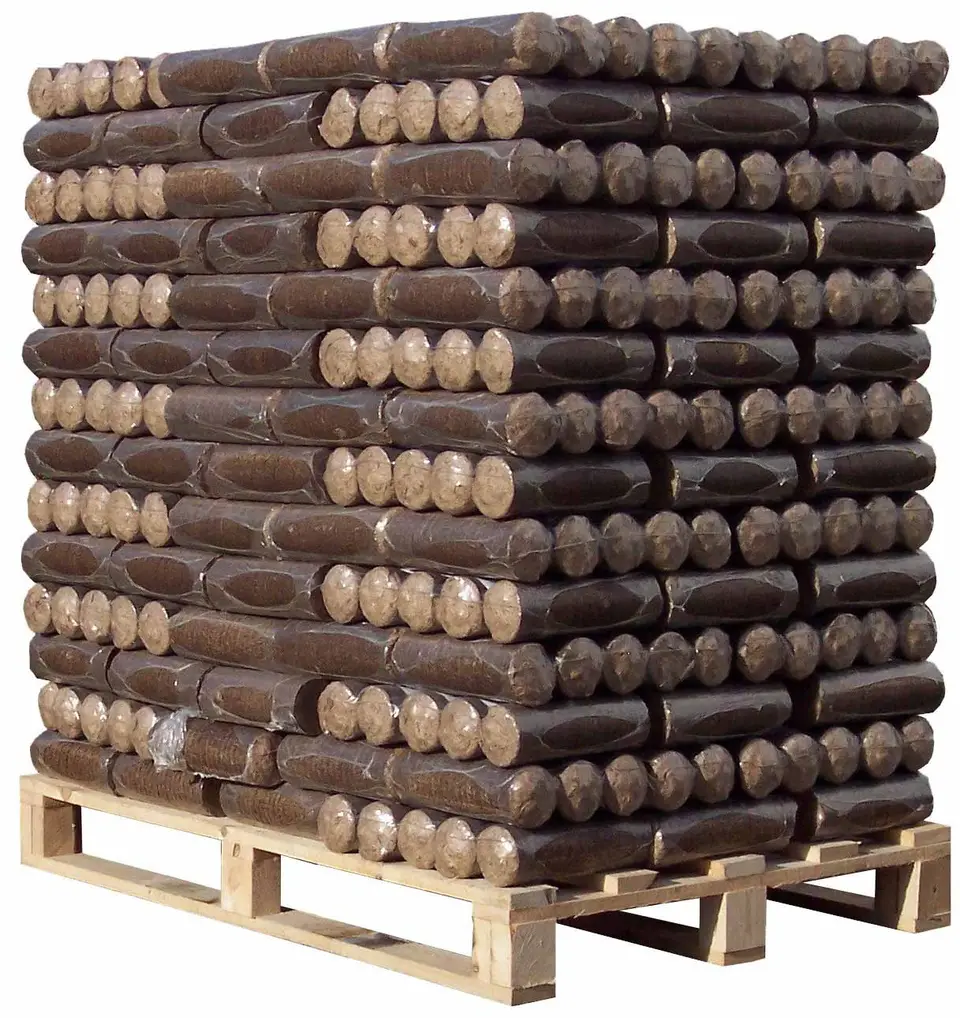
Maximum burn duration
90mm Briquettes
High-density 90mm cylindrical briquettes for maximum burn duration per feed cycle, suited to larger furnaces and batch kilns.
Feedstock: Sawdust and mixed agro-residue, compressed without any binder.
- GCV4,000 – 4,400 kcal/kg
- Moisture< 12%
- Ash content< 9%
- Diameter90 mm
- Length200 – 300 mm
- PackagingLoose / palletized
Best suited for
- Semi-automated, high-throughput furnaces
- Applications needing maximum burn duration per feed cycle
- Large-capacity boilers and continuous kilns
What ships with every order.
Regardless of which fuel you order.
Every batch lab-tested
GCV, ash and moisture are checked before dispatch, with the certificate shipped alongside the load.
Flexible packaging
30–50 kg bags, jumbo bags or loose bulk — matched to how your yard actually receives fuel.
Consistent specifications
What you were quoted is what ships — no surprises in GCV, ash or moisture between loads.
Questions we get a lot.
If yours isn’t here, ask our fuel engineers directly.
What’s the minimum order quantity?
It varies by product — share your monthly tonnage on the contact page and we’ll confirm MOQ and a delivered price.
Can we get a sample before committing to a bulk order?
Yes, sample dispatch is available for all our products ahead of a first bulk order.
Can sizing be customized to our feed system?
Within the ranges listed above, yes — tell us your furnace or boiler’s feed specs and we’ll match size and density to it.
Do specifications vary by season or supplier cluster?
Slightly — that’s why every dispatch ships with its own lab certificate rather than a generic spec sheet.