
Industry background
Bioenergy in India, from village biogas to national mandate.
Four decades of policy turned biomass from a rural cooking-fuel programme into a structural part of India’s energy mix — the same policy shift that put biocoal, pellets and briquettes on industrial buyers’ shortlists. Here’s how it got there.
The timeline.
Central schemes and regulations that shaped where the bioenergy sector stands today.
- 1981–82The National Project on Biogas Development (NPBD) is launched — India’s first major bioenergy programme, subsidizing family-size biogas plants across rural India.
- 1982Biogas is added to the Prime Minister’s 20-Point Programme and placed under the newly formed Department of Non-Conventional Energy Sources (DNES).
- 1992DNES is upgraded into a full central ministry — the Ministry of Non-Conventional Energy Sources (MNES) — and begins the Biomass Power & Bagasse Cogeneration Programme, backing India’s first grid-connected biomass power plants.
- 2002–03NPBD is restructured into the National Biogas and Manure Management Programme (NBMMP).
- 2006MNES is renamed the Ministry of New and Renewable Energy (MNRE) — the name it still carries today.
- 2018The National Policy on Biofuels is notified, setting ethanol-blending and biodiesel targets, and the Biomass-based Cogeneration Programme is relaunched under MNRE.
- Oct 2018The SATAT scheme is launched by the Ministry of Petroleum & Natural Gas, targeting 5,000 Compressed Biogas (CBG) plants producing 15 million tonnes a year.
- 2019The Pradhan Mantri JI-VAN Yojana is launched, funding second-generation (2G) ethanol plants that run on crop residue and other lignocellulosic biomass.
- Oct 2021The Ministry of Power issues India’s first biomass co-firing policy, asking coal-fired power stations to blend biomass pellets into their fuel.
- May 2022The National Policy on Biofuels is amended, moving the 20% ethanol-blending target up from 2030 to 2025-26 and widening the eligible feedstock list.
- Nov 2022MNRE notifies the National Bioenergy Programme, unifying Waste-to-Energy, Biomass and Biogas support under a single Phase-I outlay of ₹858 crore.
- Jun 2023The biomass co-firing policy is revised into a firm mandate — 5% co-firing from FY2024-25, rising to 7% from FY2025-26.
- 2024Crop-residue burning penalties under the CAQM Act are raised to as much as ₹30,000 per incident, and the Pradhan Mantri JI-VAN Yojana is extended to 2028-29 with an expanded feedstock list.
- Aug 2026The Union Cabinet approves GOBARdhan, a ₹23,731 crore unified national scheme for Compressed Biogas (FY2026-27–FY2035-36) that folds SATAT and related CBG support into one framework.
The people behind the policy.
Four of the office-holders whose decisions appear in the timeline above.
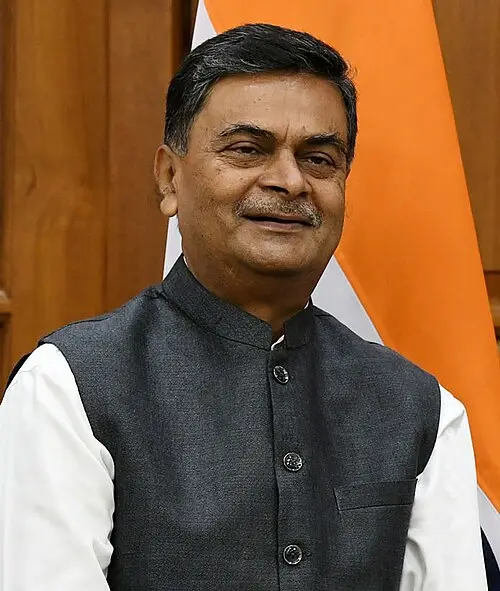
R.K. SinghMinister of Power & New and Renewable Energy, 2017–2024
His ministries notified the National Bioenergy Programme (2022) and issued the first biomass co-firing mandate for coal power plants.
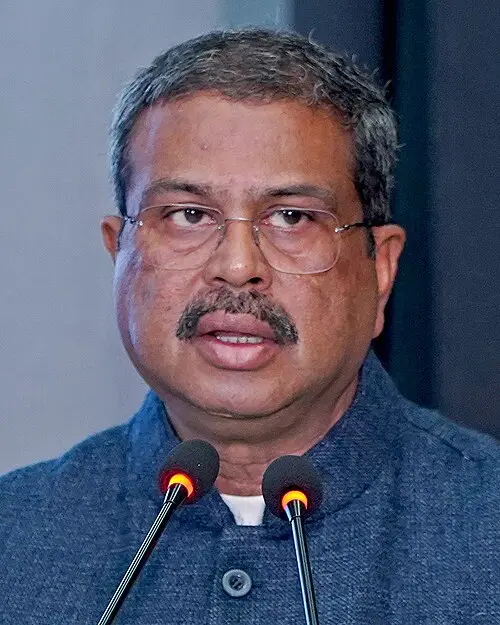
Dharmendra PradhanMinister of Petroleum & Natural Gas, until 2021
Launched the SATAT compressed-biogas initiative in October 2018, targeting 5,000 CBG plants nationally.
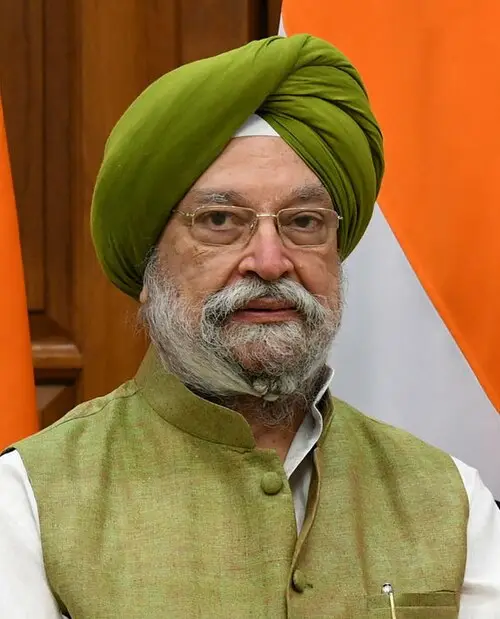
Hardeep Singh PuriMinister of Petroleum & Natural Gas, since 2021
Oversaw the 2024 extension of the Pradhan Mantri JI-VAN Yojana, funding second-generation ethanol from crop residue.
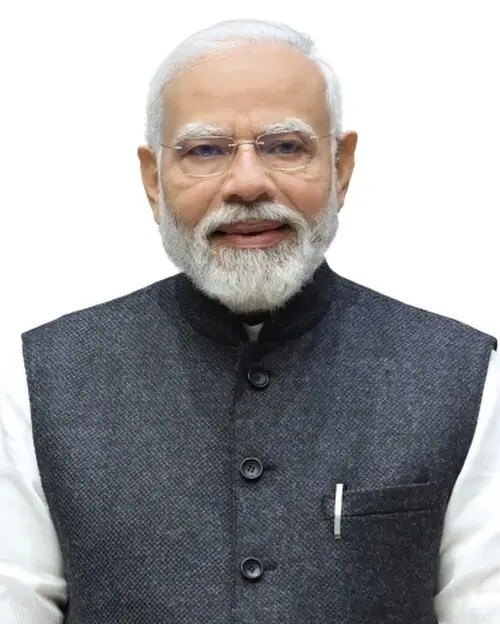
Narendra ModiPrime Minister of India
Chaired the Union Cabinet approvals behind the 2022 biofuels policy amendment and the 2026 GOBARdhan scheme.
Official Government of India photographs, published under the Government Open Data License – India (GODL) via the Press Information Bureau. Shown for factual, historical context only — A3 Energy is an independent private company and is not affiliated with, endorsed by, or representing the views of the individuals or ministries pictured.
See where A3 Energy fits into that timeline.
Read our storyFigures and dates above are drawn from public sources — the Ministry of New and Renewable Energy (MNRE), Ministry of Power, Ministry of Petroleum & Natural Gas and the Press Information Bureau, Government of India — and are current as of September 2026. Scheme outlays, targets and timelines are revised from time to time; see our policy & regulations page for the rules currently in force, or check the source ministry’s official notifications before relying on this for a compliance or investment decision.