
Regulatory landscape
The rules that shape India’s biomass fuel market.
A plain-language summary of the central schemes, mandates and regulations most relevant to buyers and suppliers of biocoal, pellets and briquettes in India — for background, not as a substitute for legal or tax advice.
National Bioenergy Programme (2022)
MNRE’s umbrella scheme for bioenergy, notified in November 2022 and running through FY2025-26. It bundles three sub-schemes: Waste to Energy (biogas, bioCNG and power from urban, industrial and agricultural waste), the Biomass Programme — support for pellet, briquette and non-bagasse cogeneration units, the category A3 Energy sits in — and the Biogas Programme for family and community biogas. Phase-I carries an outlay of ₹858 crore.
Biomass Co-firing Policy for thermal power plants
Issued by the Ministry of Power, this policy requires coal-fired power stations to co-fire biomass pellets — 5% by weight from FY2024-25, rising to 7% from FY2025-26 — using eligible agro-residues such as paddy straw, cotton stalk and mustard stalk. It stays in force for 25 years or the plant’s operating life, and is the single largest structural demand driver for biomass pellets in India today.
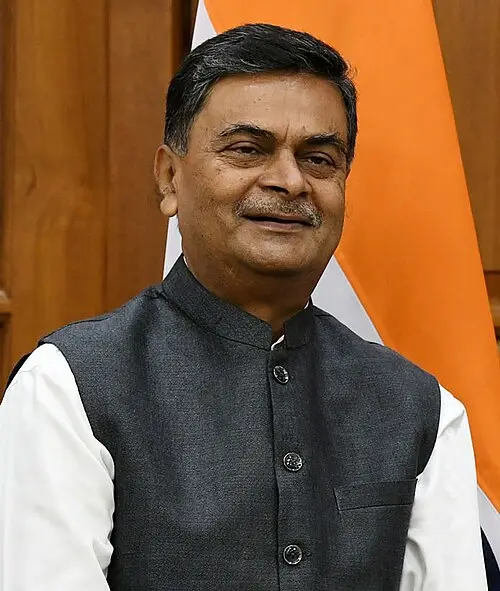 R.K. SinghMinister of Power & New and Renewable Energy, 2017–2024 — issued the original policy and its 2023 revision
National Policy on Biofuels, 2018 (amended 2022)
Sets India’s ethanol-blending targets — the 20% blending goal was moved up from 2030 to 2025-26 in the 2022 amendment — and widened the list of feedstocks eligible for biofuel production, including agricultural residue.
SATAT & GOBARdhan (Compressed Biogas)
SATAT, launched in October 2018 by the Ministry of Petroleum & Natural Gas, set out to build 5,000 Compressed Biogas (CBG) plants nationally. In August 2026 the Union Cabinet approved GOBARdhan, a ₹23,731 crore unified national scheme (FY2026-27–FY2035-36) that folds SATAT and related CBG support into a single framework.
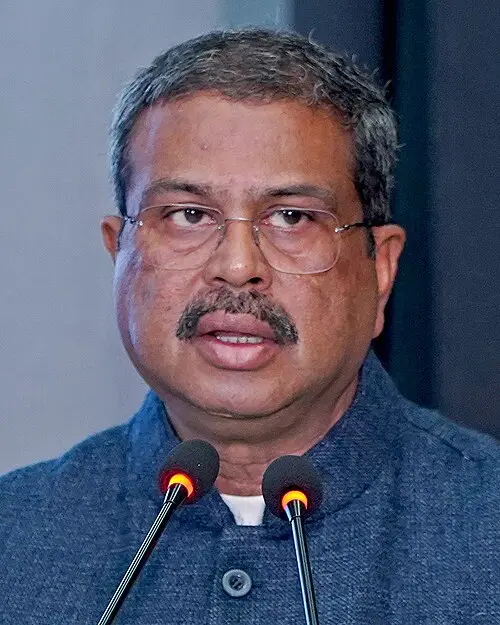 Dharmendra PradhanMinister of Petroleum & Natural Gas — launched SATAT, Oct 2018
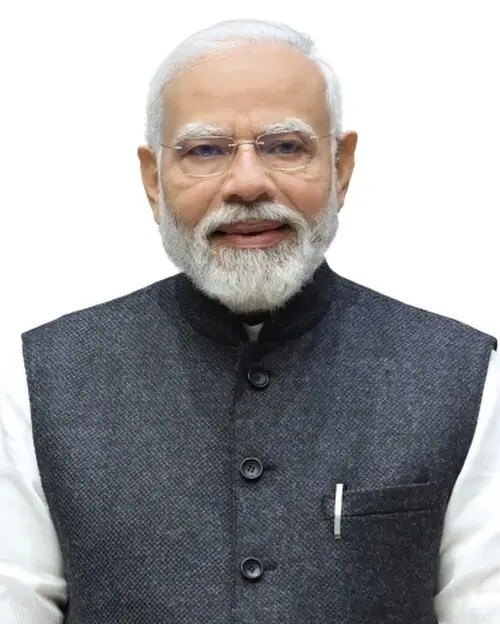 Narendra ModiPrime Minister — Cabinet approved GOBARdhan, Aug 2026
Pradhan Mantri JI-VAN Yojana
Funds second-generation (2G) ethanol plants running on lignocellulosic biomass — agricultural and forestry residue, industrial waste — with financial support of up to ₹150 crore per commercial project. Extended through 2028-29.
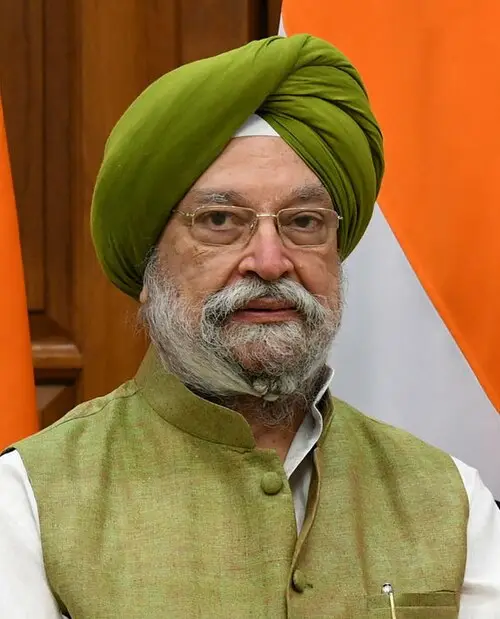 Hardeep Singh PuriMinister of Petroleum & Natural Gas, since 2021 — oversaw the 2024 extension
Crop-residue burning rules (CAQM Act, 2021)
The Commission for Air Quality Management bans open burning of crop residue across the NCR, Punjab, Haryana, Rajasthan and Uttar Pradesh, with fines of up to ₹30,000 depending on landholding size. It’s the regulatory backdrop that makes diverting residue into pellets, briquettes and biocoal — rather than burning it in the field — the compliant option for farmers and aggregators.
GST & HSN classification
Biomass briquettes and pellets are classified under HSN heading 4401 (and related codes depending on composition); the applicable GST rate depends on the exact product classification. Confirm the current rate for your specific product with your tax advisor or the CBIC’s published schedule before invoicing.
State crop-residue management (CRM) support
Several states — including Punjab, Haryana and Uttar Pradesh — run their own subsidy schemes for residue-collection equipment (balers, rakes, happy seeders) on top of the central schemes above. Availability and terms vary by state and season, so check with the relevant state agriculture department for what applies in your sourcing region.
Sourcing under the co-firing mandate? Let’s talk tonnage.
Talk to salesThis page summarizes public policy as of September 2026 for general information only — it is not legal, tax or compliance advice. Rules, rates and scheme timelines change; verify current requirements with MNRE, the Ministry of Power, CBIC or your own advisors before making business or compliance decisions. Sources: Ministry of New and Renewable Energy, Ministry of Power, Ministry of Petroleum & Natural Gas and the Press Information Bureau, Government of India. See also our bioenergy timeline. Official photographs above are Government of India publications under the Government Open Data License – India (GODL), shown for factual context — A3 Energy is an independent private company, not affiliated with or endorsed by the individuals or ministries pictured.